

Classical electromagnetism defines current and charge as foundational concepts. Current represents the flow of electric charge, typically carried by electrons in conductors, while charge is considered an intrinsic property of particles such as electrons and protons, serving as the source of electromagnetic fields. However, this conventional understanding reveals significant limitations, particularly when examining the rapid propagation of electromagnetic effects in contrast to the slow motion of charge carriers. This article introduces a new perspective that reframes the classical definitions of current and charge, emphasizing the primacy of electromagnetic fields over particle motion. Rather than proposing new equations or alternative physics, this conceptual shift highlights field dynamics to provide a more coherent understanding of circuits and electromagnetic phenomena, challenging traditional assumptions and offering fresh insights for the scientific community.
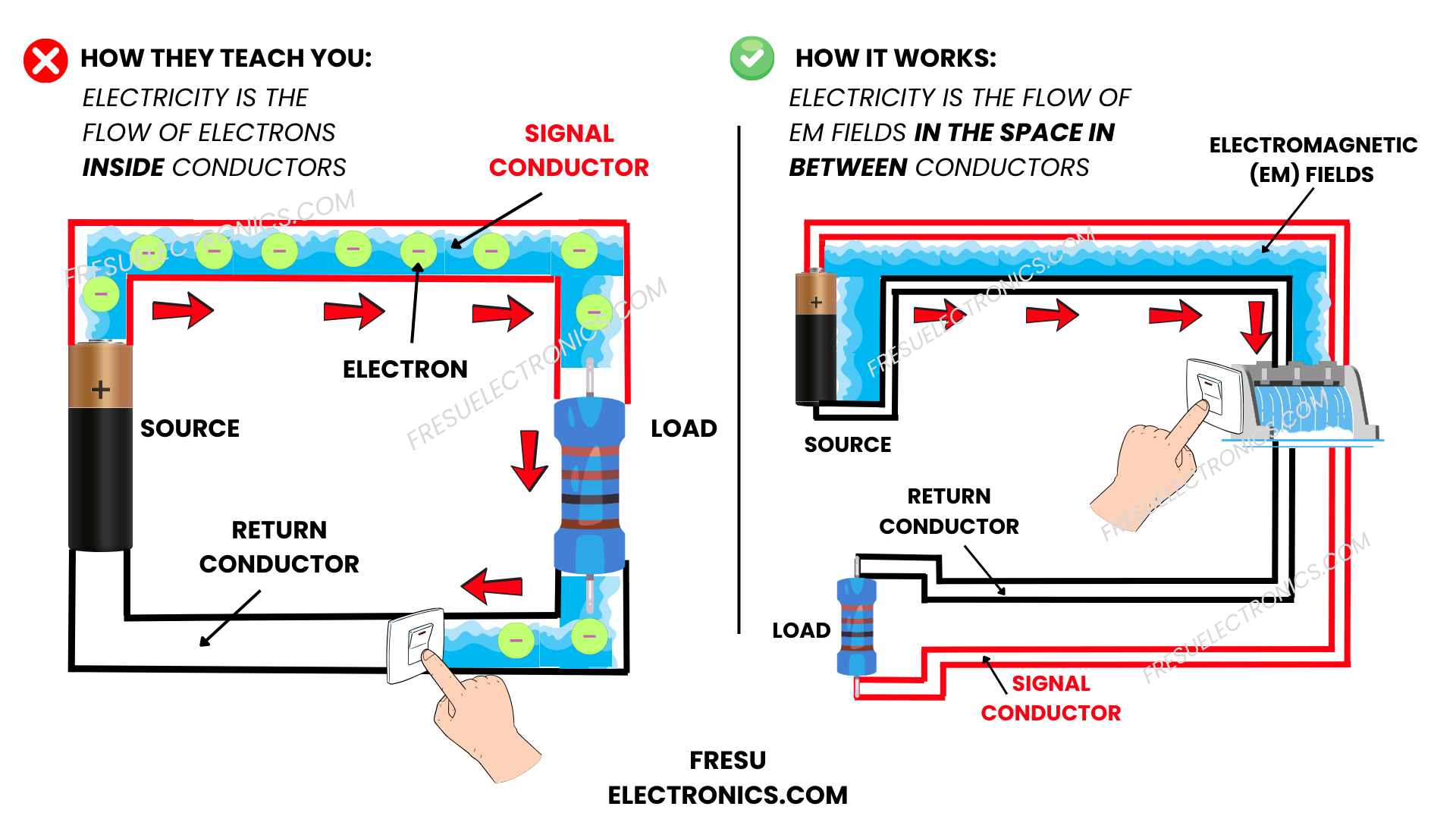
Comparison of Traditional vs. Electromagnetic Field Theory: The left side illustrates the conventional view of electricity as a flow of electrons inside conductors. The right side corrects this by showing electricity as the movement of electromagnetic fields in the space between conductors.
In classical electromagnetism, current is defined as the rate of flow of electric charge, expressed by the equation:
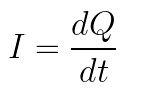
This equation indicates that current, measured in A, represents the change in charge, measured in C, over time, measured in s. Within a conductor such as a copper wire, current is traditionally understood as the motion of electrons, driven by an electric field. The current density, which quantifies current per unit area, is related to this electric field through the material's conductivity.
The average speed at which electrons move, known as the drift velocity, can be calculated using the formula:
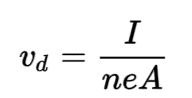
For a copper wire with a cross-sectional area of 1 mm², a current of 1 A, an electron density of approximately 8.5×10²⁸ per m⁻³, and an electron charge of 1.602×10⁻¹⁹ C, the drift velocity is approximately 73.4 μm/s—a pace comparable to that of a snail.
Charge is traditionally viewed as an inherent characteristic of particles, with electrons possessing a charge of -1.602×10⁻¹⁹ C and protons having a charge of +1.602×10⁻¹⁹ C. Charges are responsible for generating electric fields, as described by Gauss's law, and moving charges, or currents, also produce magnetic fields, as outlined by Ampère's law, which incorporates a term for changing electric fields to account for wave propagation.
This classical framework positions charges as the primary sources of fields, with their motion driving electromagnetic phenomena such as current in circuits.
The drift velocity of electrons, approximately 10 μm/s, is far too slow to explain the rapid effects of current—such as a light turning on within 6.67 ns in a 1-meter circuit. In reality, the electromagnetic wave propagates through the space between conductors at a much higher speed, determined by the medium's dielectric constant. This speed is given by: 1/√(μ₀ ε₀ εr), where μ₀ is the permeability of free space (H/m), ε₀ is the permittivity of free space (F/m), and εr is the relative permittivity of the medium (about 4 for typical PCB materials). This results in a propagation speed of approximately 150 million m/s—fast enough to explain the near-instantaneous response in practical circuits.
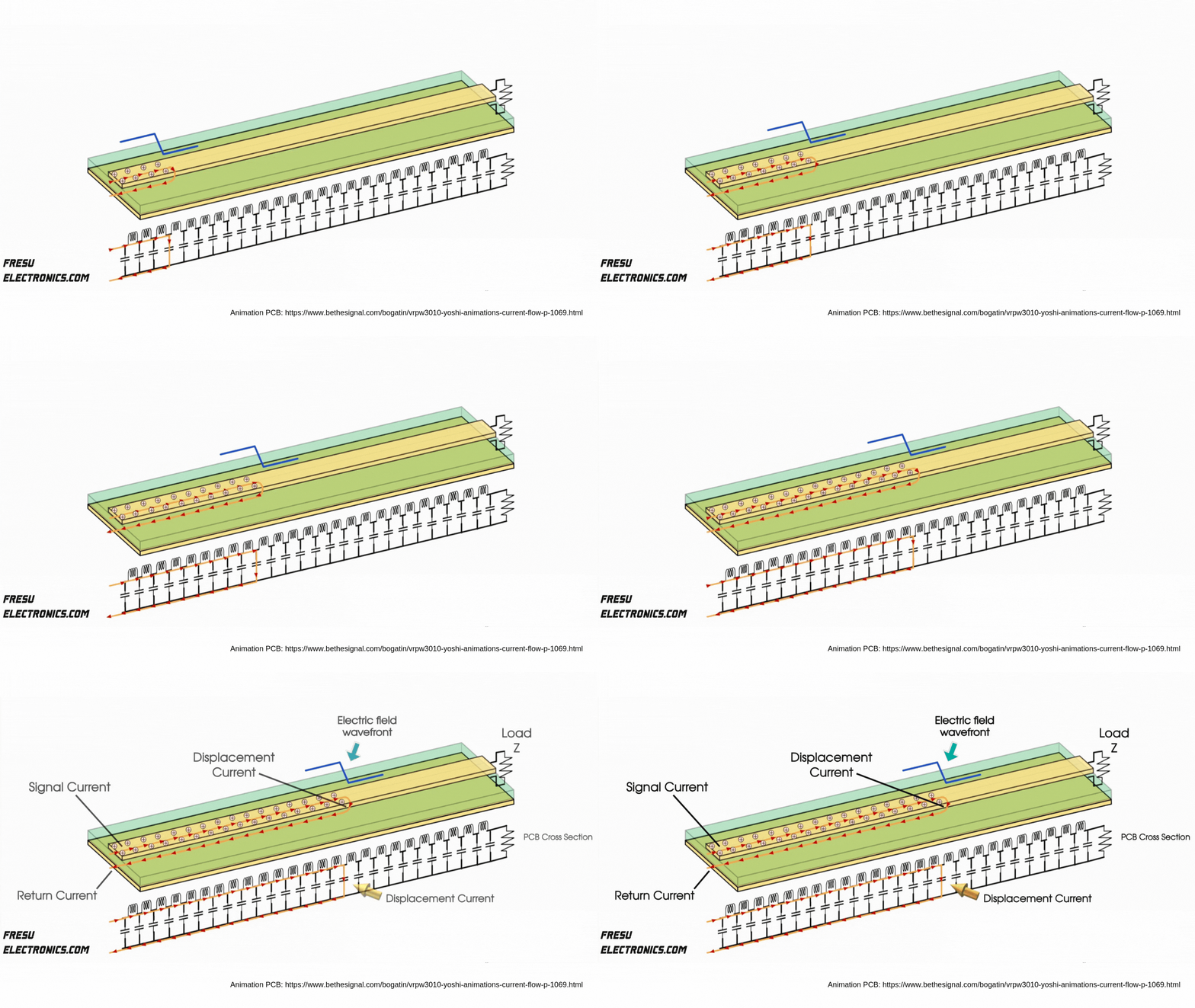
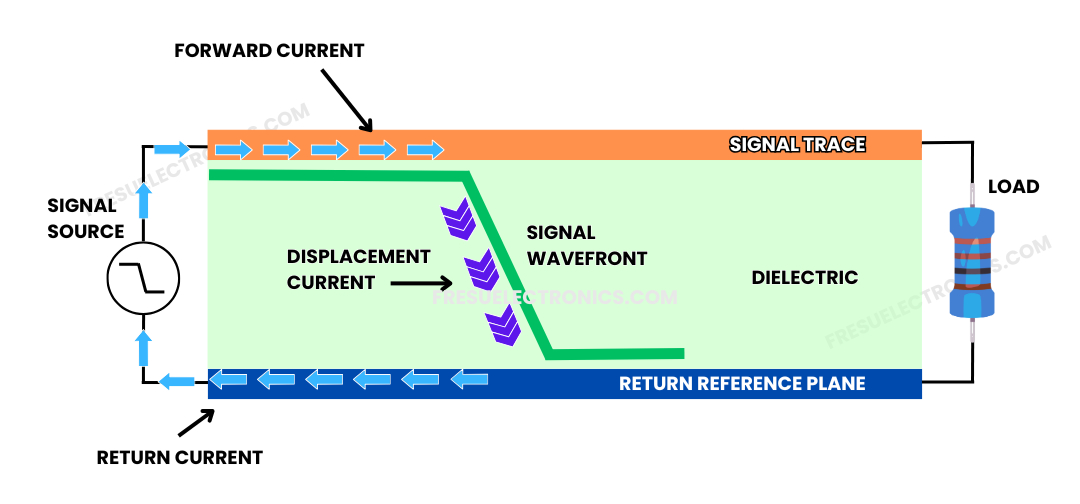
Signal Propagation in a PCB
This stark contrast, where signal propagation occurs billions of times faster than electron drift, highlights a key flaw in the classical view that electrons primarily carry energy along the wire, prompting a reevaluation of current as a field-driven phenomenon.
The traditional narrative suggests that electrons carry energy along the wire, yet energy actually propagates in the space surrounding the conductor, as demonstrated by the Poynting vector S = E × H, which shows energy flowing into the conductor from the surrounding fields. In signal-carrying conductors, such as PCB traces, coaxial cables, or differential pairs, the majority of the electric field is perpendicular to the conductors, and the Poynting vector indicates that energy propagates in the dielectric space between them, guided by the structure but not flowing inside the conductors themselves. For example, in a parallel conductor setup like a two-wire transmission line, the electric field is perpendicular to the conductors, pointing from the positive conductor to the return and reference conductor. The magnetic field forms circles around each conductor, following the Biot–Savart law (right-hand rule).
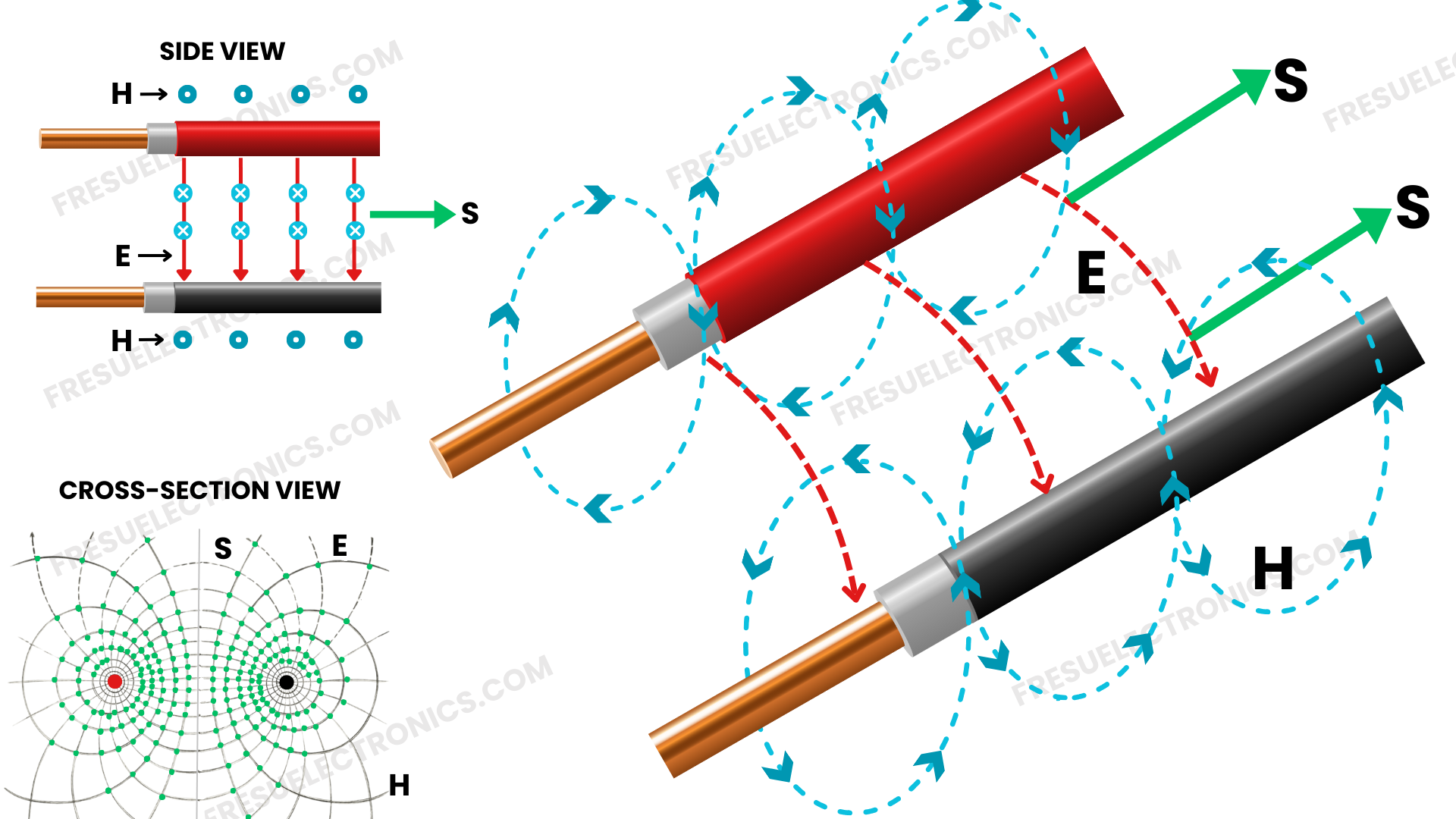
Illustration depicting electromagnetic fields around transmission lines, showing both side and cross-section views. The diagram highlights the directions of electric (E), magnetic (H), and Poynting vector (S) in relation to the conductors, providing a visual understanding of EM field interactions.
Consequently, the Poynting vector, defined as the cross product of the electric and magnetic fields, points along the direction of signal propagation, parallel to the conductors, confirming that the energy resides in the space between the wires, not inside them. While this energy primarily propagates in the dielectric, some energy does flow into the conductors to drive the current by inducing an internal electric field, though the primary propagation path remains outside the conductors.
The emphasis on charge motion overlooks the primary role of fields, which propagate energy, at a fraction of the speed of light depending on the medium's properties, and drive current effects far more rapidly than electrons can move.
To address these limitations, a reframing of the classical definition of current is proposed, one that centers on the primacy of electromagnetic fields.
New Definition: Current is the manifestation of electromagnetic field energy flux in a conductor, resulting in a measurable flow of charge, known as current, due to the response of charge carriers to the induced electric field, denoted as E. The primary driver is the propagation of electromagnetic fields in the space around the conductor, which deliver energy via the Poynting vector, inducing currents through local field interactions.
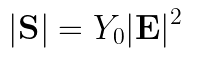
In this equation, Y₀ is approximately 0.00265 S, where Y₀ = 1 / Z₀, and Z₀ = √(μ₀ / ε₀) is the impedance of free space, approximately 376.7 Ω.
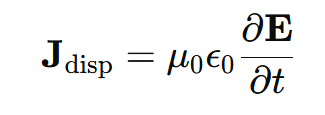
where J_disp is the displacement current density in A/m², ε₀ is the permittivity of the dielectric in F/m, E is the electric field in V/m, and ∂E/∂t is its time derivative. This displacement current closes the current loop at the propagating wavefront, establishing equal and opposite currents in the signal and return conductors as the wave travels.
If current is a field-induced effect, and electrons are not the primary entities establishing fields, the nature of charge itself must be reconsidered.
Classically, charge is regarded as an intrinsic property of particles, serving as the source of fields through Gauss's law. However:
New Definition: Charge is a localized distortion or concentration of electromagnetic field energy within the free space medium, sustained by the medium's properties, such as its permittivity and permeability. What is commonly referred to as "charge" (e.g., an electron's charge of -1.602×10⁻¹⁹ C) is an emergent phenomenon—a stable, resonant pattern of electric and magnetic fields—rather than an intrinsic property of a particle.
In this novel perspective, the electric charge is not an inherent source of energy but rather a measure of a particle's response to energy, applied through electromagnetic fields. By applying a known electromagnetic field and observing the resulting behavior (such as deflection, force, or energy storage) we can quantify charge as the interaction's outcome. This view suggests that charge reflects a particle's capacity to manifest energy within its volume under the influence of an external field.
This approach underscores the experimental essence of charge measurement, where the energy input drives the interaction, and the observed response directly informs the charge's magnitude, offering a fresh lens for understanding this fundamental property.
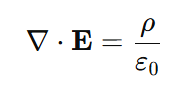
Here, div E represents the divergence of the electric field in V/m², ρ is the charge density in C/m³, and ε₀ is the permittivity of free space in F/m. Rearranging this equation, we isolate charge density as:
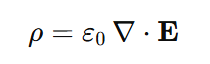
showing that ρ is directly proportional to the divergence of the electric field, scaled by the permittivity of free space. This relationship indicates that a non-zero charge density corresponds to a region where the electric field diverges, meaning field lines either originate or terminate. An electron, in this view, might be a region where the electric field diverges, representing a stable oscillation in the field, consistent with its characterization as a localized field distortion rather than a particle with intrinsic charge.
Ampère's law, as modified by Maxwell, states:
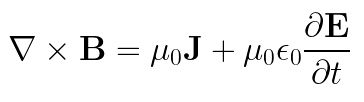
In the classical interpretation, an alternating current (represented as J) generates a changing magnetic field (represented as B) around a conductor, which in turn induces a changing electric field (E), enabling electromagnetic wave propagation. The field-based redefinition of current reinterprets this causality:
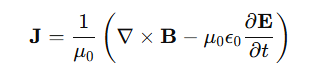
This shift emphasizes field dynamics over charge motion, aligning with the redefined view of current.
In a circuit with a signal line and return path:
By reinterpreting current and charge through a field-based framework, this perspective offers a more intuitive and unified understanding of electromagnetism, fundamentally shifting the focus from particles to fields. Current is revealed as a field-induced effect, driven by the energy flux of electromagnetic fields, with electron motion as a secondary response, while charge emerges as a localized distortion of field energy within the free space medium.
This approach resolves long-standing classical inconsistencies, such as the disparity between the slow drift of electrons and the near-light-speed propagation of electromagnetic signals, providing a cohesive explanation for electromagnetic phenomena in circuits. More than a reinterpretation, this field-centric view challenges traditional particle-based narratives, paving the way for enhanced educational approaches, novel theoretical frameworks—potentially bridging classical and quantum field theories—and the exploration of innovative technologies grounded in field dynamics.
At Fresu Electronics, we are dedicated to helping engineers grasp and implement best design practices from the outset. If you're interested in enhancing your skills, we invite you to explore our Online Courses and EMI control guides.
Stop finding EMC problems in the chamber.
An EMC Design Audit reviews your schematic and PCB layout before fabrication — identifying return path gaps, filter placement errors, and stackup decisions that turn into failures at the test house. Report delivered in 10 business days.