
A Field-Centric Perspective on Charge and Energy Transfer in Classical Electromagnetism
Categories: Electromagnetism · Tags: Electromagnetism
A field-centric Perspective on charge and energy transfer in clssical electromagnetism.pdf (54 KB)
This paper proposes an alternative interpretation of Gauss's law in classical electromagnetism, where the electric field is treated as the fundamental quantity, and charge density is derived from its divergence. We develop the mathematical framework for this inverted formulation, explore its implications for the nature of charge, and demonstrate its utility in understanding energy transfer in steady-state DC conditions via the Poynting vector. This field-centric approach aligns with modern field-theoretic perspectives and offers a novel lens through which to view electromagnetic phenomena, challenging the traditional charge-centric paradigm.
1 Introduction
Gauss's law is a cornerstone of classical electromagnetism, conventionally expressed as:
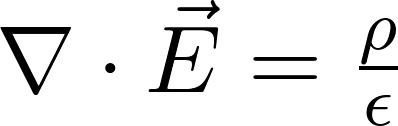
where E→ represents the electric field, ρ the charge density, and ε the permittivity of the medium. This formulation positions charge as the primary source, with the electric field arising as a consequence of charge distributions. Charge, in this view, is an intrinsic, conserved property of matter, independent of the field it generates.
This paper introduces an inverted perspective, redefining charge density as a derived quantity:
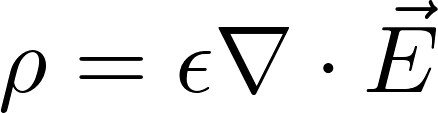
Here, the electric field E→ is elevated to the fundamental entity, and charge density ρ emerges as a measure of the field's divergence scaled by ε. The motivation for this inversion is twofold: to explore a field-centric paradigm that may offer conceptual unity with modern physics and to provide new insights into electromagnetic energy transfer. We proceed by detailing the mathematical framework, examining its implications, and applying it to energy propagation in steady-state DC systems.
2 Inverting Gauss's Law
The conventional form of Gauss's law is:
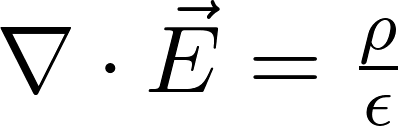
Rearranging this, we define charge density as:
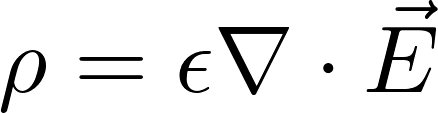
The total charge q within a volume V becomes:

Applying the divergence theorem, this transforms into:

where the charge is quantified by the flux of E→ through the surface enclosing V. This inverted formulation posits that charge is not an independent entity but a property encoded in the spatial variation of the electric field.
3 Implications of the Field-Centric Approach
This inversion carries significant theoretical consequences:
-
Redefinition of Charge: Charge density ρ is no longer a fundamental source but a secondary attribute of E. A divergence-free field (∇·E = 0) implies ρ = 0, while nonzero divergence signals the presence of charge, scaled by ε.
-
Mathematical Equivalence: The inverted form preserves the bidirectional relationship between E→ and ρ. Just as E→ can be computed from ρ in the standard approach, ρ is uniquely determined from E→ here, ensuring consistency with classical theory.
-
Field-Theoretic Alignment: Prioritizing the field resonates with quantum field theory and unified field models, where fields are fundamental, and particles or charges emerge from field excitations. This classical reinterpretation mirrors such paradigms.
4 Charge as an Emergent Property
In this framework, charge emerges from the field's properties:
-
Physical Meaning: Positive divergence (∇·E > 0) denotes a source (positive charge), while negative divergence (∇·E < 0) indicates a sink (negative charge). The permittivity ε quantifies this into ρ.
-
Conceptual Shift: Charge becomes a derived construct, suggesting that the field configuration is the underlying reality. This challenges the notion of charge as an inherent material property.
-
Observational Consistency: The continuous nature of ρ in this model aligns with macroscopic electromagnetism, though it abstracts the discrete charges (e.g., electrons) observed microscopically.
5 Reconciling with the Conventional Perspective
The traditional view, where ρ drives E, reflects a causal intuition rooted in experimental observation. The inverted approach:
-
Remains empirically equivalent, as both formulations yield identical predictions.
-
Shifts the emphasis to fields, potentially illuminating scenarios where field measurements precede charge inference, such as in field-dominated systems.
6 Energy Transfer in Steady-State DC Conditions
A compelling application of this field-centric view is in analyzing energy transfer, particularly via the Poynting vector S→, in steady-state DC conditions where fields are static yet energy flows continuously.
6.1 Poynting Vector and Energy Flux
The Poynting vector, representing energy flux density, is:
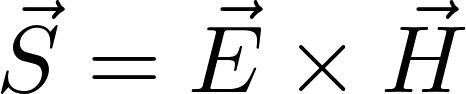
where H is the magnetic field. In the field-centric model, E→ and H→ are primary, with
ρ = ε ∇·E and current density J→ = ∇×H, or in the case of conductors J→ = σ E→ where σ is the conductivity of the material (S/m).
6.2 Energy Density and Transfer Velocity
The electromagnetic energy density u (in J/m³) is:

where μ is the permeability. We hypothesize that energy flows at velocity v→, such that:
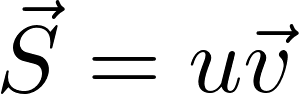
so:
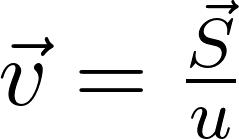
In a DC scenario, E→ and H→ are perpendicular, so:
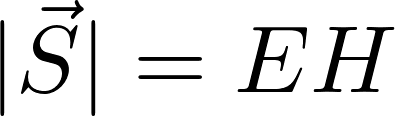
Using the medium's impedance Z = √(μ/ε), we relate E and H:

Then:
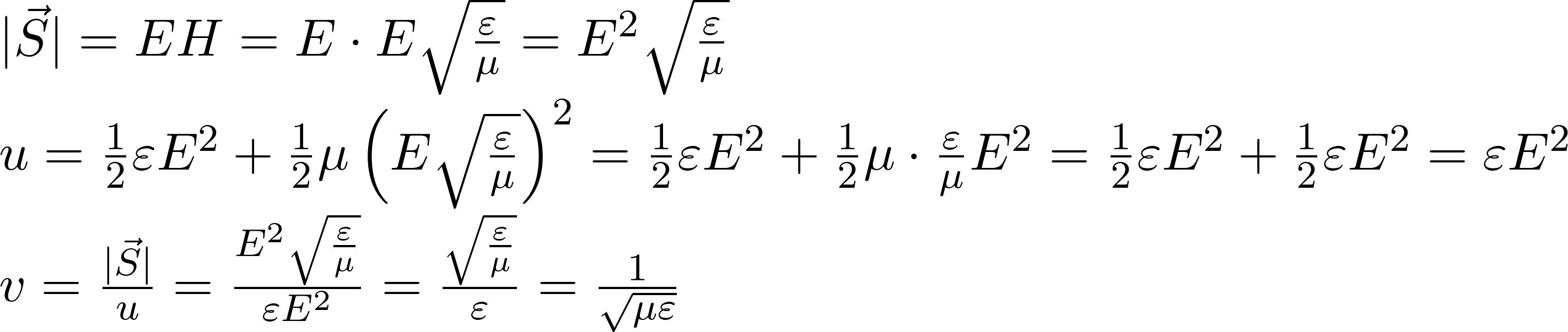
This velocity, v = 1 / √(μ ε), matches the speed of electromagnetic waves, even in static
conditions.
6.3 Implications
-
Universal Velocity: The velocity v is a property of the medium, bridging static and dynamic electromagnetism.
-
Field-Driven Insight: Energy flow derives from field interactions, reinforcing the primacy of E→ and H→.
-
Physical Interpretation: In DC, energy propagates at this speed along field lines, despite static field magnitudes.
7 Conclusion
Inverting Gauss's law to ρ = ε ∇·E redefines charge as an emergent property of the electric field, offering a field-centric alternative to the traditional view. This method is mathematically valid, aligns with field-theoretic trends, and elucidates energy transfer in steady-state DC systems, where the Poynting vector reveals a propagation velocity tied to the medium's properties. This perspective invites further exploration into the foundational nature of electromagnetic phenomena.